
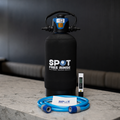

Window and solar panel cleaning
Pure water DI tank for window and solar panel cleaning
Our DI (deionised) water tank connects between your tap and your pole. Scrub, rinse with pure water, and the glass dries clear on its own. No squeegee, no ladder.
4.98 from 53 reviews
- Ships next business day
- Bypass head fitted
- TDS meter included
- Free shipping
- Assembled and tested in Brisbane
- 1-year warranty
It depends on your tap water. Put in your postcode, or your own TDS reading if you have one.
300 ppm High minerals
Example only. Enter your postcode to see yours.
Lite 10L
850 to 970 L
Pro 15L
1,330 to 1,500 L
Commercial 25L
2,230 to 2,500 L
Litres of pure water from each full set of resin. Use the bypass for scrubbing and pure water only for the rinse, and each set goes a lot further. Postcode figures are a guide from local water suppliers and your tap can differ. Your free TDS meter gives the exact reading.
★★★★★
"I was so impressed I thought I'd give the house windows a go as well, same result... spotless and no squeeging required."
See it on the job
Our customers and us, cleaning glass with pure water from our tanks.
A pole on its own just moves tap water
The minerals in your tap water go up the pole with it, and they're what dry on the glass as spots. Pure water is what makes a water fed pole work.
 How long will it last me?
 How long will it last me?
Most sellers quote one generic number that has nothing to do with your situation. We work out yours, from your postcode or your own TDS reading.
| Your tap water | Lite 10L | Pro 15L | Commercial 25L |
|---|---|---|---|
| 100 ppm | 2,550 to 2,900 L | 4,000 to 4,500 L | 6,700 to 7,500 L |
| 200 ppm | 1,280 to 1,450 L | 2,000 to 2,250 L | 3,350 to 3,750 L |
| 300 ppm | 850 to 970 L | 1,330 to 1,500 L | 2,230 to 2,500 L |
| 400 ppm | 640 to 730 L | 1,000 to 1,130 L | 1,680 to 1,880 L |
| 500 ppm | 510 to 580 L | 800 to 900 L | 1,340 to 1,500 L |
Why litres, not houses? A first clean on a dirty house can use several times the water of a regular clean, and every operator works differently. Litres are the honest number, and experienced window cleaners already think in them.
Tap water changes through the year. Supplies get blended and dam levels move, so your reading can go up and down. Your free TDS meter always tells you where you stand: 0 ppm means fresh resin, doing its job. Above 10 ppm, it's time to replace the resin.
Very hard water? Above about 400 ppm the resin works a lot harder. Give us a call before you buy and we'll talk you through it.
Designed to handle pressure washer flow, so a water fed pole is easy work
Every tank we sell is built to keep up with a car pressure washer, and those usually pull somewhere between 5 and 10 litres a minute. A water fed brush only needs roughly 2 to 3 litres a minute to rinse glass properly.
So on a pole, the tank is working well within itself, giving you steady pure water at the brush from the first window to the last. The slower flow also gives the water more time with the resin, which helps it make the most of every fill.
It runs on your normal tap pressure. No pump, no power, nothing to plug in.
Make every fill go further with the bypass
Every tank comes with the bypass head already fitted. On a cool, shady side it saves a lot of resin. In full sun, skip it and use pure water the whole way.
- 1Scrub the whole side on bypass Tap water goes straight through to the brush, so none of your resin is used. Do the whole side before you switch.
- 2Flick to filter and run the hose clear Your hose is still full of tap water. Let it run until you hear air come through, then you know it's running pure. The longer the hose, the more water that takes, so switch once per side, not once per window.
- 3Rinse the whole side pure Rinse every window while the glass is still wet. Pure water leaves nothing behind, so it dries clear on its own.
Full sun? Skip the bypass. By the time you switch over and run the hose clear, tap water on hot glass has already dried into spots. On sunny sides, scrub and rinse with pure water only.
Cleaning solar panels the right way
Dust, pollen and bird droppings sit on your panels and get in the way of the sun. Here's how to clean them without doing any harm.
- Clean them coolGo early in the morning or late in the afternoon. Water on hot panels dries before you can rinse, and hot glass doesn't like cold water.
- Soft brush, tap pressureA soft brush and normal tap pressure is all it takes. Never use a pressure washer or anything abrasive on panels.
- Pure water, no soapNo detergent needed. Pure water lifts the dirt and leaves nothing behind, so there's no film for the next lot of dust to stick to.
- Stay off the roofOn a single storey with room around it, work from the ground. Otherwise clean from an extension ladder at the roof line. Never walk on the panels, and check your panel maker's cleaning instructions before you start.
Safety first: carbon fibre conducts electricity, and so does a wet pole. Never use one near overhead power lines, and keep well clear of the line into your house.
Why we don't add a carbon pre-filter
A carbon filter takes out chlorine, taste and smell. It doesn't take out the dissolved minerals that cause water spots, and those minerals are what use up your resin.
Most of Australia's big water supplies, including Sydney, Brisbane and much of WA, are disinfected with chloramine rather than chlorine. Chloramine is far harder for carbon to break down, and a small inline cartridge does very little to it at working flow.
We tested pre-filters with our own customers and saw no noticeable difference in resin life. So rather than charge you for a part that doesn't earn its place, we fit the bypass head, which does.
What's in the box
- DI tank, filled with resinReady to use the day it arrives.
- Bypass head, fittedOn a lot of window cleaning tanks this is an extra. Ours comes installed.
- TDS meterCheck your tap and your tank output in seconds.
- 2 m connector hoseTap to tank, so you can start straight away.
- Simple instructionsAnd a real person on the phone if you get stuck.
Need a pole too?
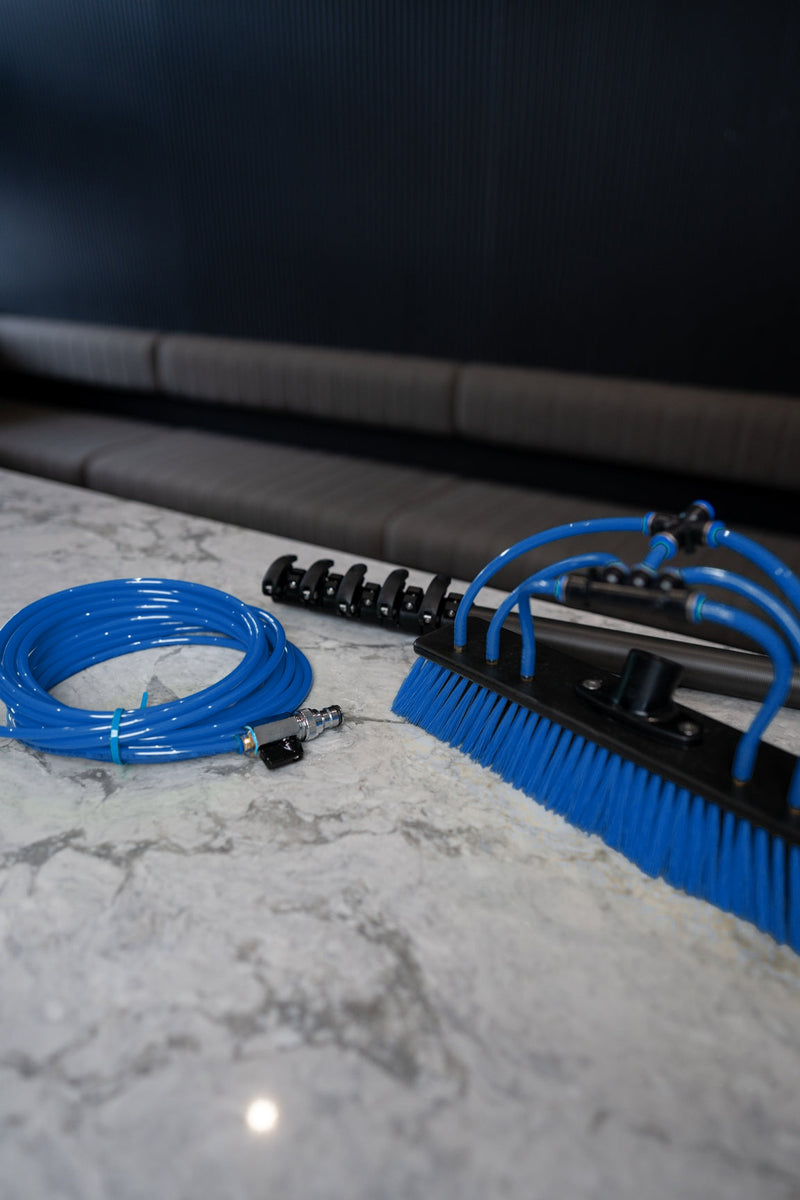
DI tank + 22ft water fed pole kit
Both in one order: the tank with bypass fitted, the TDS meter, and the pole with a 6-jet angle brush, 8 m internal hose and on/off valve at the handle. Hook it up to your own hose reel.
Lite + WFP Kit$1,049save $100
Pro + WFP Kit$1,199save $150
Shop the bundle and save Or buy the pole kit on its own, $650What our customers say
These are reviews of the same tank. Most come from people rinsing cars, which is the harder job for the tank.
I don't usually write reviews but I'm going to make an exception here.
I live up in the Pilbara, and our water here is some of the harshest stuff in the country so trust me when I say I have tried a few different so called SPOT FREE promises in my 20 + years up here, none of which have come close!
So, previously the only way to get a spot free rinse is to immediately follow up with a wipe down before the heat dries the calcium and other nasties on your paint work and windows.
When Spot Free Rinse they called me the day it arrived to see what I thought (Left a message on voicemail) I initially thought wow very prompt customer service, however being I hadn't used it, yet I didn't bother returning the call.
So, today Sunday 18th Jan 2026 was the first time using it and WOW!!! I rinsed the whole car on a 39-degree day under the shade of our carport and without using any drying aids or towels this filter gave a 100% SPOT FREE finish.
Amazing filter guys and so glad I have now found something that actually works, and on some of the hardest water around.
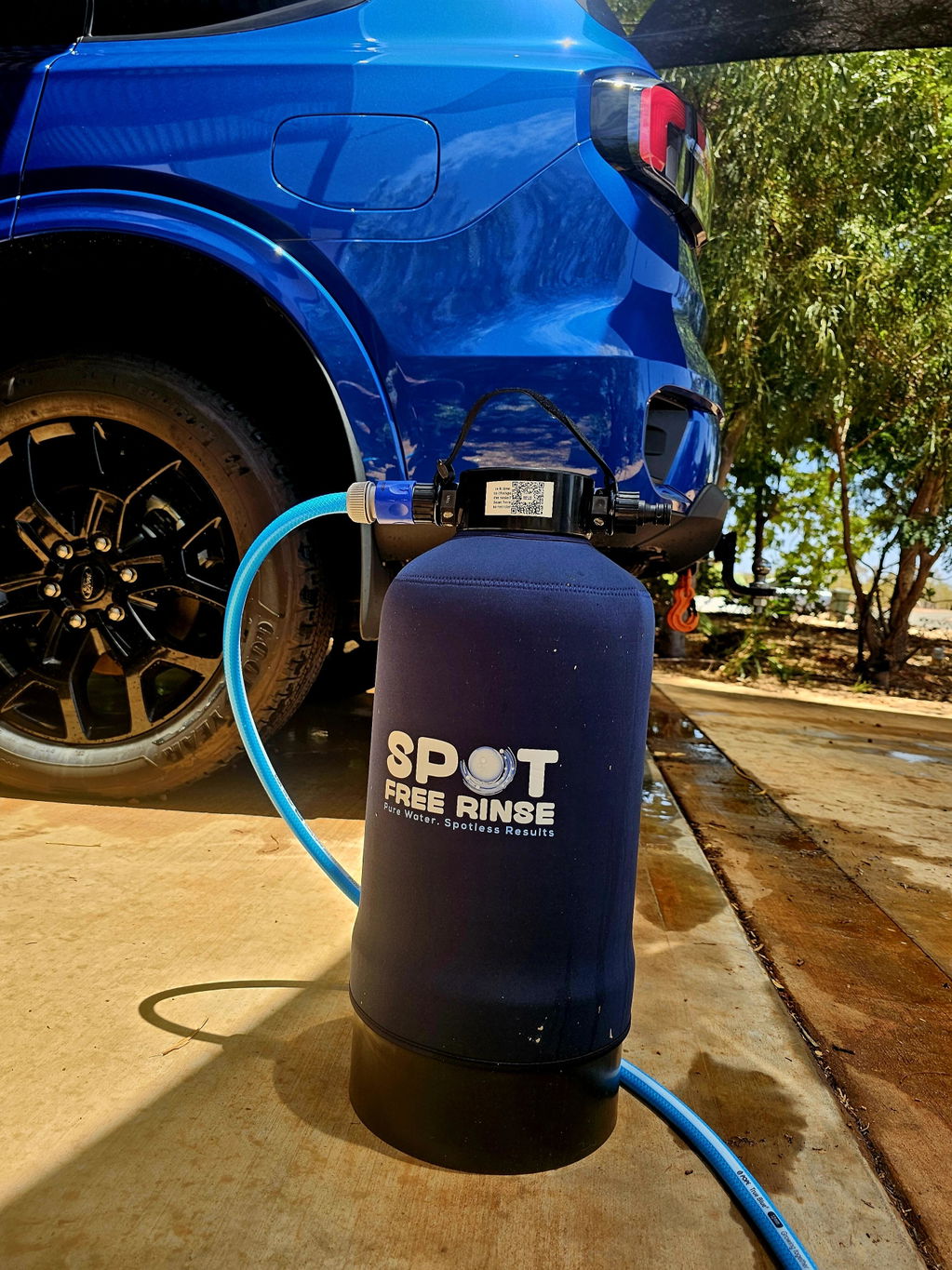
I have wasted years of my weekends drying to minimise water spots. Thousands spent on towels, drying agents, blowers…they did a good job, but always some spots. This rinse is perfect, first time, and even washed in full sun. Local TDS of 247 in Brisbane. A final rinse with Spot Free and it was parked to air dry. Not a single spot. I wish I had done this earlier.
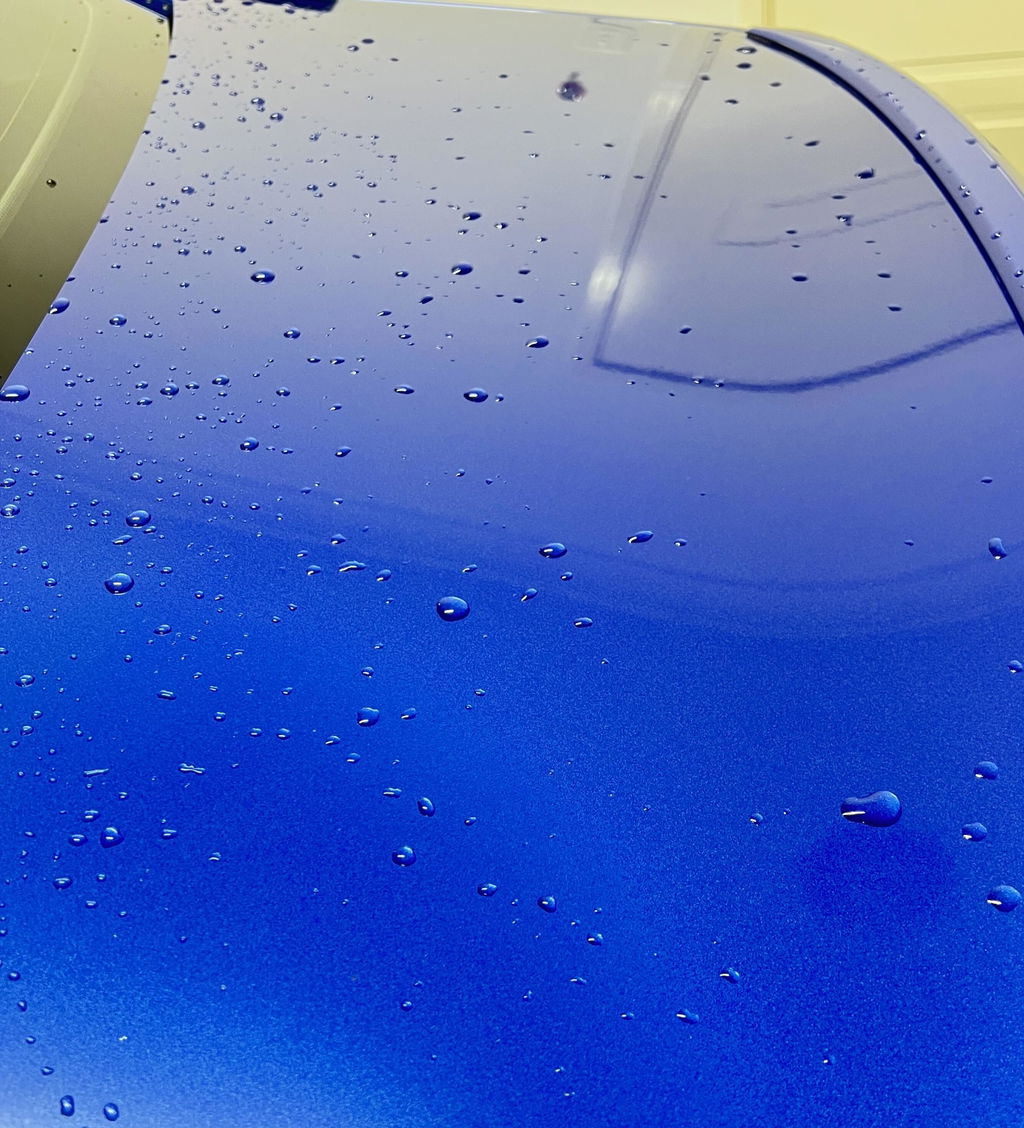
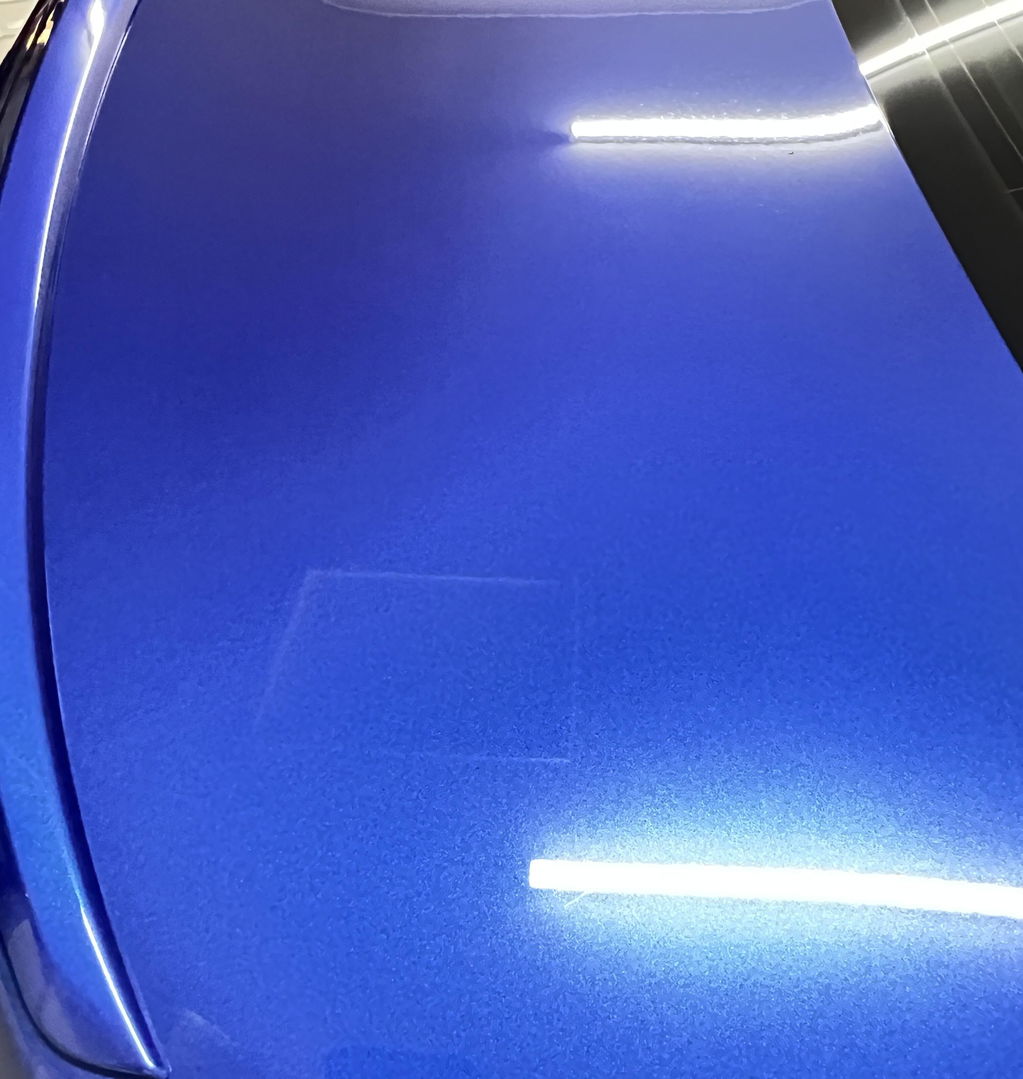
Washed and rinsed the ute in mid day sun with no drying or water spots! Works perfectly😎
Everything Spot Free Rinse promises is absolutely delivered! I love it and can't believe I didn't do it earlier. What surprised me the most is the glass. I didn't have to do a damn thing to the windscreen after the final rinse. So, no towels required and no glass cleaner at the end of the wash. Bloody awesome product!
OMG what a difference the Spot Free Rinse Purification Tank makes. I can now do final rinse after washing my car and just walk away. No spots or runs. So simple to use and a massive time saver. Incredible results.
Questions we get asked
What is a DI tank?
DI stands for deionised. The tank is filled with resin that takes the dissolved minerals out of your tap water, so what comes out the other end dries clear instead of leaving spots.
When do I replace the resin?
Check the tank's output with your TDS meter. 0 ppm means fresh resin, doing its job. Above 10 ppm, it's time to replace the resin. Resin replacement kits start from $159 for the Lite and $225 for the Pro.
How many houses will I get out of it?
We don't quote houses, because a first clean can use several times the water of a regular clean, and every operator works differently. Put your postcode into the calculator for the litres you'll get, then compare that with what you use on a typical job.
Does it work for solar panels?
Yes. Solar panels need exactly the same thing as glass: pure water for the rinse so nothing is left behind when it dries.
Can I run two poles off one tank?
Yes, with a splitter after the tank. Keep in mind two poles use the resin twice as fast.
My water is very hard. Will it still work?
It will still give you pure water, but the resin won't go as far. Above about 400 ppm, call us before you buy and we'll help you work out whether it suits how much you clean.
Do I need a pump or power?
No. It runs on your normal tap pressure.
How do I store it between jobs?
Keep it out of direct sun, and close the tank off so the resin stays wet between jobs.
