
Deionised Water Systems
Portable deionised water systems that turn tap water into pure rinse water. They connect to a garden hose, run on mains pressure and need no power or pump.

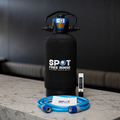
Spot Free Rinse Purification Tank

Resin Replacement Kits
- Featured
- Most relevant
- Best selling
- Alphabetically, A-Z
- Alphabetically, Z-A
- Price, low to high
- Price, high to low
- Date, old to new
- Date, new to old
Deionised water system for spot free rinsing
Deionised Water Filtration System for Spot Free Final Rinsing
A deionised water filtration system helps you complete a wash seamlessly. Tap water often carries minerals that leave marks once it dries. Using purified water at the final rinse stage keeps surfaces spot-free. At Spot Free Rinse, we build systems that fit into wash routines. Each setup connects easily, runs smoothly, and delivers consistent results for cars, glass, boats and outdoor surfaces.
Deionised Water Systems for Cleaner Final Rinsing
A deionised water system is built to remove dissolved solids from water before the final rinse. This matters because minerals left in regular tap water can dry on paint, glass, and other surfaces. By reducing those dissolved solids, a deionised water system helps produce cleaner rinse water for jobs where finish quality matters.
This collection focuses on Spot Free Rinse tanks built for users who want a practical portable deionised water system for cars, windows, boats, solar panels, and other exterior surfaces. These systems are suited to home users, enthusiasts, and operators who want a simple way to improve rinse quality without overcomplicating the wash process.
A DI spot free rinse system helps you achieve a clean finish without relying on heavy drying or repeated wiping.
How a Deionised Water Filter System Works
A deionised water filter system uses DI resin to remove dissolved minerals from the incoming water supply. When the resin is fresh, the output can read 0 ppm on a TDS meter. As the resin is consumed, output rises over time. That is why many users choose to run DI water during the final rinse rather than throughout the full wash.
A mixed bed resin tank combines different resins to remove a broad range of dissolved solids from the water supply, which is what allows the system to reach 0 ppm TDS output.
Using deionised water in the final stage helps target the part of the process where mineral spotting is most likely to occur. A deionised water tank gives you better control over rinse quality, especially when working on vehicle paint, glass, polished surfaces or outdoor panels.
Where Portable DI Systems Are Used
A portable deionised water system can be used across a wide range of rinse applications, including:
- Car washing
- Boat rinsing
- Window cleaning
- Solar panel rinsing
- Exterior glass and hard surfaces
Because these systems are portable and easy to connect, they fit naturally into many wash routines. A portable DI water system fits easily into your setup and moves with you between different cleaning tasks. They are especially useful for users looking for a deionised water filtration system that can move between different jobs and surfaces.
Why Choose Us for Deionised Water Systems
Choosing a deionised water system from Spot Free Rinse means you get equipment designed for practical use, not lab conditions. The focus stays on reliable output, simple setup, and results you can see after every rinse.
- We build for Australian water conditions
- We provide a quick hose connection without a complex setup
- Our portable tank designs are easy to move and store
- We deliver consistent 0 ppm output when the resin is fresh
- We support easy TDS checks using a compatible meter
- We build durable systems suited for repeated outdoor use
- We design our systems to reduce drying time and manual effort
Choosing a DI tank in Australia means accounting for local water conditions, which can vary in mineral content and affect resin life.
Select the Right Deionised Water System
The right system depends on how much water you use, how often you wash, and your local TDS level. A larger tank suits frequent, high volume use, while smaller tanks are ideal for less frequent rinsing.
A pure water rinse system helps prevent mineral residue from settling on surfaces during the final wash stage.
Stop Chasing Water Spots After Every Wash
A clean finish should not depend on how fast you dry or how carefully you wipe. When minerals stay out of the water, the result speaks for itself the moment the surface dries.
Choose a deionised water filtration system from Spot Free Rinse and turn your final rinse into the step that makes the whole job look right.
Common questions
What is deionised water?
Deionised water is water that has had its dissolved minerals removed by ion exchange resin. Tap water naturally carries minerals such as calcium and magnesium. A DI tank swaps them out as the water passes through the resin bed, and what comes out is pure water. With nothing dissolved in it, it dries without leaving spots.
Do I need a carbon pre-filter with a DI system?
Not for rinsing cars, windows, boats or solar panels. A carbon filter mainly treats chlorine, and much of Australia's tap water is treated with chloramine instead. For a final rinse it isn't something you need to add. The tank connects straight to your garden hose and the resin does the work.
What does TDS mean on a water filter?
TDS stands for total dissolved solids, the minerals and salts dissolved in water, usually measured in ppm (parts per million). Tap water readings vary a lot around Australia. Every tank comes with a TDS meter so you can check the output. It reads 0 ppm while the resin is fresh, and above about 10 ppm it's time for a resin replacement.
What is mixed bed DI resin?
Mixed bed resin combines cation and anion resin in the one tank, so it removes a broad range of dissolved minerals in a single pass. Our tanks use HFR (High Flow Resin), a mixed bed resin chosen and tested to keep up with real rinse flow rates, since resins vary a lot in how they hold up when the tap is running full.
Does a deionised water system reduce water pressure?
Our tanks are built for real rinse flow rates, so you rinse at full mains pressure. They work with a normal hose and spray nozzle, a pressure washer or a water fed pole. Internal filtration keeps the resin inside the tank so it can't escape into your fittings or equipment.
Why does pure water dry without spots?
Water spots are what's left when water evaporates. The drop has to stop somewhere, and when it dries, the minerals it was carrying stay behind on the surface. Pure water has had those minerals taken out, so there's nothing left in it to dry onto the glass or paint. That's why you can rinse and let it dry.
