

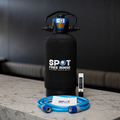
How to use a water fed pole. Reach the top, spot free.
To use a water fed pole for window cleaning, connect the pole to pure water, open the valve half or a quarter of the way, scrub the frames and then the glass, give it a good rinse and let it dry on its own. Pure water leaves no spots or streaks, so there's no squeegee. Here's how to set up and use your 22ft or 30ft Hybrid Kit.
What's in the box
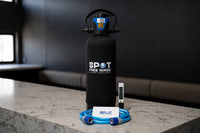
Here's what comes in the 22ft or 30ft water fed pole kit. The DI tank and the garden hose to the pole aren't included.
- 22ft or 30ft hybrid pole: carbon fibre and fibreglass, light and strong even at full reach. The 22ft extends to about 6.7 m in 5 sections and closes to 155 cm. The 30ft extends to about 9.18 m in 6 sections and closes to 180 cm.
- Blue nylon brush with 6 brass jets on a dual head adapter: the adapter sets the brush angle, and its spare arm takes a second head, like a T-bar or Fixi Clamp.
- 8 m internal hose (10 m with the 30ft): runs through the pole, coiled with a reusable zip tie for packing up.
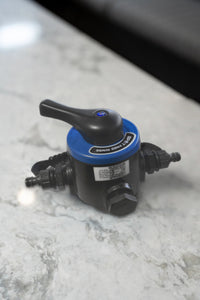
- Two on/off ball valves: one at the handle, where the garden hose connects, and one just before the brush. A quarter turn takes each one from closed to fully open.
Setting up the pole
From the box to the glass in five steps.
Attach the brush
Angle it to suit
- Attach the brush to the adjustable angle adapter, then screw the aluminium tip into the base of the adapter.
- Slot the aluminium tip into the top of the pole. If the brush feels loose, tighten the screw.
- Set the brush angle so the bristles sit flat on the surface you're cleaning. The further back you need to stand, the more angle you'll want.
Connect the water hose
Purified for spot-free
- Feed the hose in through the bottom of the pole and out through the aluminium tip, then click it into the push-fit adapter on the brush.
- Connect the other end to a longer garden hose running from the OUT side of your Spot Free Rinse deionised water tank. The longer hose lets the tank stay in one spot while you move around the house. A shorter hose works too, but you'll be carrying the tank with you from window to window.
Extend the pole
Only as far as you need
- Extend from the top (thinnest) section down, locking each clamp as you go. Clamp firmly, but don't overtighten, because too much force can crack the pole.
- Only extend as many sections as the job needs. A shorter pole is lighter and easier to control.
Wash
Frames first, then glass
- Open the valve at the brush fully, then set the flow with the valve at the handle: half or a quarter open. Half open is the lever halfway between closed and fully open.
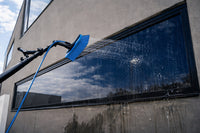
- Scrub the top frame and sides first, then wash the glass, working top to bottom in sections. You only need the glass wet with water running down it to carry the dirt off. The technique tips below show how the pros do it.
- Need more water for a stubborn patch? Open it up a little, then turn it back down.
- Turn the water off while you set up for the next window. With the pole collapsed for low windows, use the valve right at the brush. With the pole extended, use the valve at the handle where the garden hose connects, because the brush valve is up out of reach.
Flow tips Half or a quarter open while you scrub. The box at the top of this page explains why. Too much water splashes dirt and chalky old paint down from above the window, and it won't dry clear.
Turn the water off between windows. Going straight from one window to the one right next to it, it's fine to leave it running. If it's going to take you a little while to get set up at the next window, or you're collapsing the pole to do a lower one, shut it off until you're set up, then carry on.
Use the valve you can reach. Pole collapsed and working close up on lower windows? Turn it off right at the brush with the valve just before it, and open that one fully again when you carry on. Pole extended? The brush valve is up out of reach, so use the valve at the handle where the garden hose connects. Either one does the job.
Conserve water as much as you can, especially in hard water areas. If your tap water reads over about 250 ppm on the TDS meter, the resin works harder for every litre, so every litre you save makes it last longer.
Final rinse and pack up
No squeegee needed
- Give each window a good rinse at the end. Open the flow up a little if you need to, lift the brush a few centimetres off the glass and let the jets rinse from the top down.
- Then let it dry on its own. With 0 ppm water at the brush there's nothing left in it to dry into spots or streaks.
How to get a spot-free finish
The pole does the reaching. These habits, the same ones professional window cleaners use, do the rest.
Start at the top
Highest windows first
- Do the highest windows first and work your way down the house, so anything that runs off the top windows lands on glass you haven't cleaned yet.
- On each window, work from the top down. If the window above is still dripping, give it a minute before you start the one below.
- New to a water fed pole? Get the feel of it on a ground floor window before you go to full height.
Frames first
That's where the dirt hides
- Most of the dirt sits on the top frame, in the corners and in the seals, not on the glass. Scrub along the top frame and down the sides first, and keep going until the water running off is clear.
- If the sill is dirty, scrub it now too, so it can't drip or splash back onto clean glass later.
- Then scrub the glass with side to side strokes, overlapping as you go.
Keep the water on the window
Not above it
- Keep the brush and the spray on the window and its frame. Don't let the water hit the wall, eaves, gutter or any vents above the window.
- Dirt sitting above the window gets washed down over the glass you've just cleaned, and it can keep dripping long after you've packed up.
- Lower flow means less splash, which is why half or a quarter open is a must. Too much water washes dirt and chalky old paint down from the wall, eaves or frame above, and it dries on the glass and won't dry clear. On a windy day, keep an eye on where the spray drifts.
Rinse last, then let it dry
Pure water is the last thing to touch the glass
- Start the rinse at the top of the glass so a sheet of water runs down, then follow it down slowly. On big panes, rinse in strips about 60cm wide.
- Hold the brush a few centimetres off the glass, or rest it very lightly to cut down the splash. With the boar's hair brush, always rinse with it off the glass.
- Once a window is rinsed, don't touch the frame with the brush again. Let it air dry. No squeegee, no towel.
Hot days and solar panels
Beat the sun
- In full sun the glass can start drying before you've finished rinsing. Work in smaller sections and keep it wet, or do the shady side of the house first.
- Do solar panels early in the morning or late in the afternoon, when they're cool.
- Keep the tank in the shade while you work, too.
The first clean takes longer
After that it's quick
- Windows that haven't been done in a while carry built up dirt in the frames and seals. Expect to scrub and rinse them twice the first time.
- After that first proper clean the frames stay cleaner, and every clean after it is quicker.
- Spot a dirty run or a few marks as it dries? It's usually dirt coming out of the frame, or a patch the rinse missed. Give that window another scrub and rinse, and check the TDS meter reads 0 ppm at the brush.
- White marks that stay after a good scrub are usually old mineral stains etched into the glass by years of tap water. A brush won't lift those, but cleaning with pure water won't add new ones.
Bypass or Filter?
Bypass is there as an option
- The bypass head on your tank gives you a choice. Filter sends pure water to the pole. Bypass skips the resin and sends plain tap water.
- For really dirty, grimy glass that isn't in the sun, like an undercover shop front or a row of alfresco windows at the back of the house, you can scrub on Bypass first. Give them all a good scrub (the T-bar is handy for handprints), then switch to Filter for a quick scrub and the final rinse with pure water, before the tap water has a chance to dry on the glass. You'll use very little pure water.
- After you switch to Filter, let it run. The tap water in the hose comes out first, then you'll hear air coming out of the line. Once that's through, it's pure water. With a long garden hose plus the pole hose that takes a little while, and a 0 ppm reading on the TDS meter at the brush confirms it.
- In direct sun or on a hot day, tap water dries on the glass too quickly and leaves spots, so stay on Filter the whole time.
Want more detail? Read our full guide: How to clean windows with a water fed pole.
Brushes and attachments
The kit comes with a dual head adapter. The brush sits on one arm and the spare arm takes a second head, so you can turn the pole around to switch between them without swapping anything over. Here's what each one is for.
Blue nylon brush
35cm, 6 jets, the brush in the kit
- Lighter, gentler bristles that glide easily. The one for regular cleans of windows, frames and solar panels.
- Keep a spare blue nylon brush for when the bristles splay or wear short.
Boar's hair brush
26cm, 4 jets, boar's hair outside, nylon centre
- Natural boar's hair does the hard scrubbing and nylon in the centre helps it glide. Use the boar's hair brush on glass and solar panels with built up grime or bird droppings, or a first clean in a long time.
- Always rinse with it lifted off the glass.
- Rinse it with clean water after each job and let it dry with the bristles facing down so they keep their shape.
Swivel T-bar washer
35cm microfibre, for greasy glass and big panes
- Fit the T-bar washer to the spare arm, loosen the tension nut, set the head to the angle of the glass and tighten it to hold.
- Handy on lower windows with handprints or greasy marks, and for washing big panes fast.
- If a job needs soap, dip the sleeve in a bucket of soapy water and wash, then turn the pole around and rinse it all off with pure water through the brush. Never run soap through the pole.
- Wash the sleeve in cold water and let it air dry. Skip fabric softener, because it clogs the microfibre.
Fixi Clamp
A cloth, sponge or pad up high
- Screw the Fixi Clamp's threaded adapter onto the spare arm.
- Twist the collar to open the jaws, drop in a microfibre cloth, sponge or scrub pad, then twist it closed to clamp it tight.
- Use it on a stubborn mark, in corners and along edges, or anywhere else you need a cloth up high, then rinse with pure water through the brush.
Scraper
For paint spots and stickers
- The spare arm can also hold a scraper. We don't sell them, so check the fitting with us before you buy one elsewhere.
- Only scrape wet glass and keep the blade flat. Check with the glass maker before scraping toughened, tinted or coated glass, because a blade can scratch it.
Care & storage
A minute of care after each job keeps the pole light and smooth for years.
After each use
Pack-up routine
- Close the valve at the handle, disconnect the water and let the hose drain.
- Wipe the sections down as you retract them. Grit in the clamps is what wears poles out.
- Before packing up, leave the pole in the sun for a few minutes. The black finish heats up quickly and dries the sections out, so no stagnant water gets trapped inside.
- Coil the hose and secure it with the reusable zip tie.
- Store the pole dry, out of direct sunlight.
Water fed pole questions
What people ask us most about pure water window cleaning.
How far should I open the valves?
The six brass jets put out a lot of water, so half or a quarter open is plenty. While you scrub, you only need the glass wet with water running down it to carry the dirt off. Turn it up or down as you need, then give it a good rinse at the end. Too much water splashes up above the window and washes down dirt and chalky old paint from above, which dries on the glass and won't dry clear. It also uses up your resin faster for no better result. Both valves are ball valves, and a quarter turn opens them fully, so only open them part of the way.
Can I run soap through the pole?
No. In our experience soap sticks inside the 8 mm hose, takes a long flush to clear, and what's left dries as spots. If a job needs soap, fit a T-bar to the spare arm, wash with soapy water from a bucket, then turn the pole around and rinse it off with pure water through the brush.
Do water fed poles leave streaks?
Not when you rinse with pure water. Streaks are minerals and detergent residue drying on the glass. With 0 ppm deionised water for the final rinse, there's nothing dissolved in the water to dry as a streak, so the glass dries clear with no wiping.
Why are there dirty runs on the glass after I clean?
It's almost always dirt from above or around the glass, not the water. Dirty water from the top frame, a sill, or the wall and eaves above runs back down after you've rinsed. Scrub the frames first, keep the flow half or a quarter open, keep the spray on the window and frame only, rinse from the top down and do upper windows before lower ones. A TDS reading of 0 ppm at the brush rules out the water.
How do you clean high windows without a ladder?
With a water fed pole. The 22ft (6.7m) hybrid pole reaches second storey windows with your feet on the ground, and the 30ft (9.18m) gives you extra reach for higher glass. Scrub the frames and glass with the brush, rinse with pure water and let it dry on its own. It's how professional window cleaners work at height without ladders or scaffolding.
What water do you use with a water fed pole?
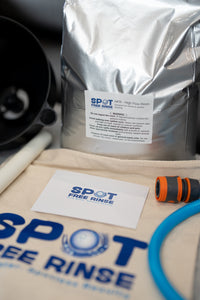
Deionised (demineralised) water. It's what makes pure water window cleaning work. Because the water carries no dissolved minerals, it dries spot-free without squeegeeing. A Spot Free Rinse deionised water tank produces it straight from your garden tap. Check the output reads 0 ppm with the included TDS meter before you start.