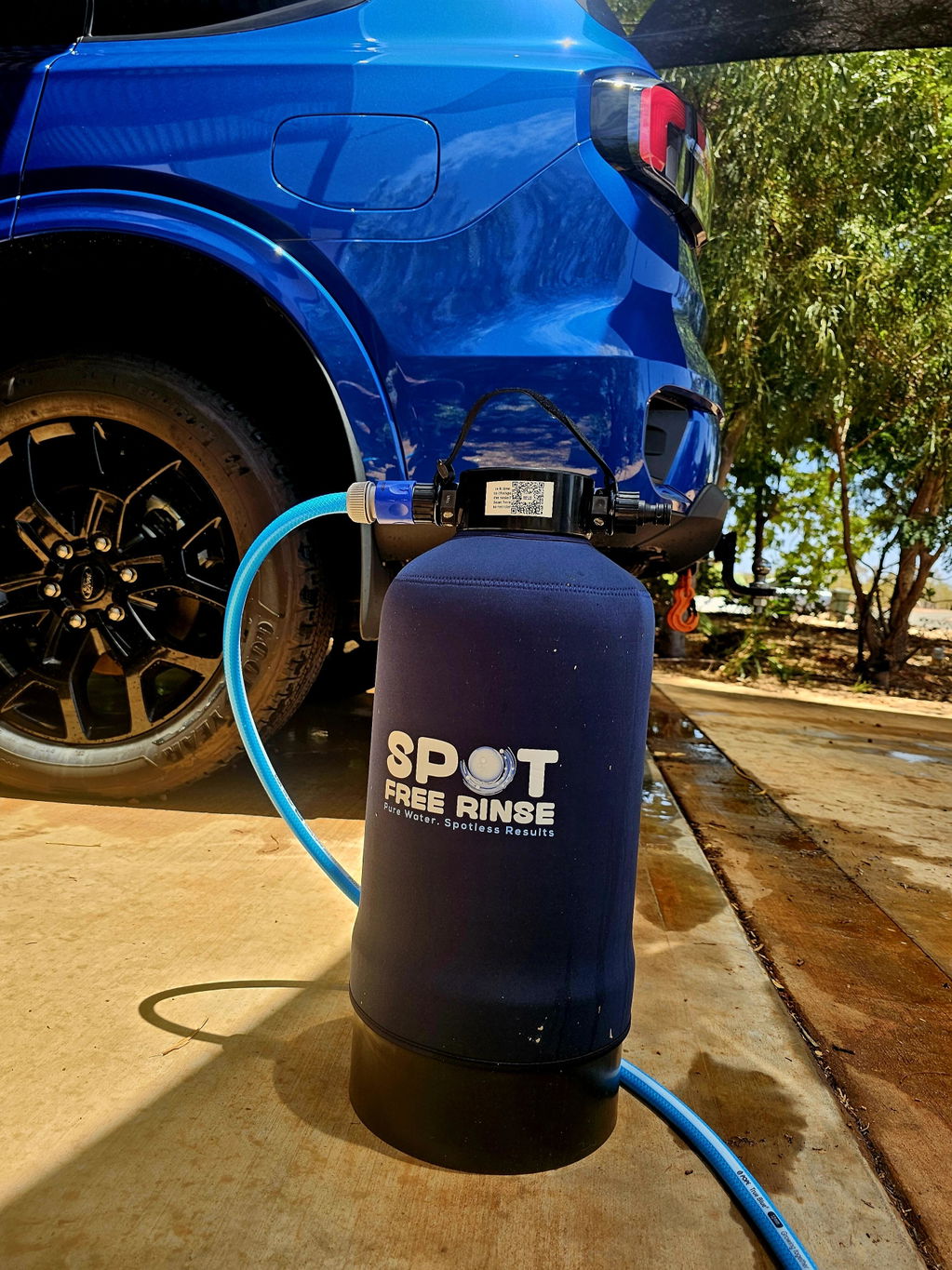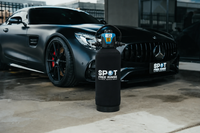


Spot Free Rinse Purification Tank


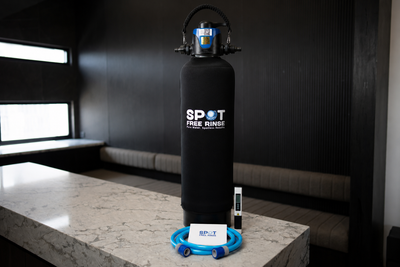
Lite 10L at a glance
Pro 15L at a glance
Commercial 25L at a glance
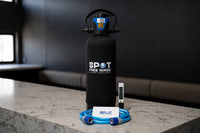
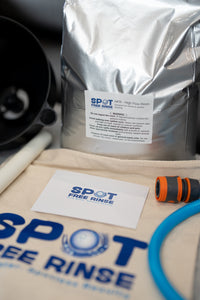
In the box: tank pre-filled with resin, bypass head fitted, TDS meter, 2 m hose and instructions.
Rinse figures are a rough guide. Your water, how many cars you wash and how much water you use all change them.
Example at 100 ppm. Pop your postcode in to see yours.
“Our water here is some of the harshest stuff in the country… I rinsed the whole car on a 39-degree day… and without using any drying aids or towels this filter gave a 100% SPOT FREE finish.”
Washing that much? The Commercial goes even further between resin replacements. Get in touch if you want to talk about it.
A guide from the published water reading for your postcode (or your TDS reading), assuming you use the tank for the final rinse. The TDS meter in the box gives you your exact number. Washing for a business? Chat with us about the Commercial.
Send someone a hint
We've written it for you. Send it to whoever might be shopping for you.
Opens your phone's sharing: Messages, WhatsApp, email
From our owners
-
Cars, 4WDs
& motorbikes -
Caravans
& boats -
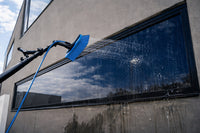
Windows, glass
& pool fencing -
Solar
panels
Buying it as a gift? Add a gift note and choose a send date in the cart, or .Not sure which size? Give a gift card and let them choose.
- Afterpay. Pick Afterpay at checkout. First payment then, the other 3 every 2 weeks, interest-free. Late fees apply if you miss one. How it works
- PayPal Pay in 4. Pick PayPal at checkout, then Pay in 4. Same 4 payments every 2 weeks, interest-free, no late fees. How it works
- Shop Pay Installments. Pick Shop Pay at checkout. 4 interest-free payments every 2 weeks, or monthly plans that charge interest, shown before you agree. Terms
Each is subject to the provider's approval and terms. Afterpay Australia Pty Ltd, Australian Credit Licence 527911. Shop Pay Installments is credit provided by Affirm Australia Pty Ltd, Australian Credit Licence 569362.
Our courier's last days to send for delivery before Christmas, metro to metro:
- QLDTue 22 Dec
- NSW, ACT, VIC and SAMon 21 Dec
- TASFri 18 Dec
- WAThu 17 Dec
- NTMon 14 Dec
These are their dates, not a guarantee. Regional and remote areas usually take a day or two longer, the further out the longer, so the earlier the better.
Missed your state's date? A gift card arrives by email, even on Christmas morning.
Orders ship within the next business day. Most orders arrive in 2 to 5 business days, WA allow 5 to 8. Shipping is free on the Lite and Pro.
30-day money-back. If the tank doesn’t do what we say it does, send it back within 30 days of delivery and we’ll refund it. This is on top of your rights under Australian Consumer Law. See our full returns policy for details.
International orders ship GST-free. Import duties and customs fees may apply on delivery in your country, and those charges are the responsibility of the customer.
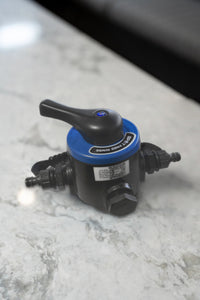
Use the bypass. Wash with tap water through the bypass, then switch the head over to the filter for the final rinse. You can run the whole wash through it, but that uses the resin up much faster.
Washing in full sun? Work one panel at a time. Wash it, then rinse it before moving on.

Spot Free Rinse Purification Tank
See How Others Are Using It
Rated 4.97 by verified owners
From 72 verified product reviews. 1,200+ happy customers and counting.
A Spot Free Rinse That Is Really Spot Free!!
“I don't usually write reviews but I'm going to make an exception here. I live up in the Pilbara, and our water here is some of the harshest stuff in the country.”
Legitimately amazing!
“I've used it a couple of times now on my car and windows and when the water dries there's literally no evidence of water! AMAZING!! Also gave my Yamaha and engine bay a clean and it dried spot free and immaculate.”
Works exactly as promised
“The filter works exactly as promised. Perfect spot free rinse straight out of the box. Add to that exceptional service with it being shipped within hours of me ordering.”
Isn't water just water?
Why would anyone filter the water they wash their car with? Fair question. Tap water looks clean, but it carries dissolved minerals, and they stay behind when the water dries.
-

Every drop carries minerals
Tap water is full of dissolved calcium and magnesium you can't see.
-

It dries to a white spot
The water evaporates and the minerals stay on the paint or glass.
-

The halo stays
You wipe the spot off, but a thin ring stays stuck to the surface. We call it the calcium halo.
-

The next drop stops there
The next drop catches on that ring and dries in the same place. Wash after wash, they build up.


Soap and water won't shift it
A cloth and soapy water slide straight over a halo, the same way they never quite get a shower screen clean. Halos sitting on a ceramic coating stop it beading like it did when it was new.
Check your own car
Clean one window, then look at the sun's reflection in the glass. See rings or haze in the glare? Those are calcium halos.
Pure water leaves nothing behind, so no new halos form.
It won't remove halos that are already there. That's a job for a detailer and a polish.
Shop TanksPure Water. Zero Spots. No Drying.
Honestly, you don't need one. It's a luxury.
You wash the car, rinse it with pure water and pack up. No chamois, no towel, no racing the sun. Once you've done it that way, it's hard to go back.
Hard water is where it makes the biggest difference, and where it goes through resin the fastest. The resin replacement is what it costs to skip the drying.
Tap Water Leaves Spots
Tap/Tank/Bore water is full of dissolved minerals. When it dries on your car, windows, or solar panels, those minerals are left behind as lime scale/water spots.
Spot Free Rinse Purifies Your Water
Connect to your hose and rinse. As water flows through the tank's resin, every dissolved mineral is removed, leaving 100% pure water.
Spot-Free. No Drying Needed.
Just wash, rinse, & pack up, let it air-dry. Pure water leaves zero residue, for a flawless finish every single time.
Why Choose Spot Free Rinse
What you only find out after buying a cheap system. See how we compare
Which size, how long it lasts, and how fast it flows
A bigger tank holds more resin, so it lasts longer, costs less per rinse and keeps up with a faster flow.
-
Lite2 bags · 10 L
97 rinsesat 100 ppm
10 L/minSuits most car pressure washers.
-
Pro3 bags · 15 L
150 rinsesat 100 ppm
Higher flowMore resin, so it keeps up above 10 L/min.
-
Commercial5 bags · 25 L
250 rinsesat 100 ppm
Highest flowThe most resin, for high volume use.
Soft water? Under 100 ppm, even the Lite keeps up above 10 L/min.
Bigger tank, cheaper rinse
Water uses up the top layer of resin first. That used layer is about the same depth in every tank. In a small tank it's a big share of the resin. In a big tank it's a thin slice off the top, so more of what you paid for gets used before you see spots.
- Lite $1.64
- Pro $1.50
- Commercial $1.32
Resin cost per rinse: the resin replacement price divided by the top of each rinse range, at 100 ppm and 30 litres a rinse.
Hard water means fewer rinses per resin set
These counts are for 100 ppm tap water, final rinse only, 30 litres a rinse. A Lite that does 97 rinses at 100 ppm does about 48 at 200 ppm, and so on.
Very hard water still gets a 0 ppm rinse. It just uses the resin up faster, so you'll replace it sooner. That's the minerals in the water, not the tank.
What's the flow rate?
The tank doesn't restrict your flow. 10 L/min is our guide for the Lite, not a limit, and the Pro and Commercial keep up with more.
Using a pressure washer? Don't slow it down by restricting its water supply. It needs its full supply, and starving the pump can damage it.
More on flow rate
It's not what most people think. The flow rate we talk about is the recommended flow for your water's TDS, so you're not pushing water through faster than the resin can work.
Why size matters
The resin pulls minerals out as the water passes through, and it needs a moment with each drop. Think of checkouts at the shops. A bigger tank has more checkouts open, so it keeps up when the water comes faster. Soft water is a shorter queue.
Why only the Lite has a number
10 L/min is our guide for the Lite, not a limit. On soft water it hardly matters. On very hard water the resin has a lot more to pull out of every drop, and if the water moves through too fast it struggles to keep up, so the resin gets used up quicker. The right flow for you comes down to:
- Your tap water's TDS
- The flow you run
- Tank size
- How old the resin is
How the resin wears
-
Fresh
0 ppm -
Halfway
0 ppm -
Near the end
Up to 10 ppm
Water flows down through the tank, so the resin is used from the top down. As it wears, the flow it can keep up with drops, and your TDS meter starts to creep above 0. On a hose, turning it down will often bring it back to 0. Most people keep their usual flow, around 7 L/min on a pressure washer, and replace the resin when it reads about 10 ppm or spots start to show.
Not sure which size? Call or text Marko on 0423 364 936 and we'll size it together.
In WA? Get the most out of your resin
WA water is harder than most of the country, which is exactly why a pure final rinse makes such a difference there. Harder water also works the resin harder, so you'll get fewer rinses than the 100 ppm figures on this page. A few ways to make it go further:
- Wash and rinse with tap water, then use the tank for the final rinse only
- Keep the flow gentle on the last pass
- Go up a size. The Pro costs less per rinse than the Lite and needs fewer resin replacements
Postcode figures are a guide only. A TDS meter gives you the exact reading. Questions? Call or text Marko on 0423 364 936.
Rinse and litre figures are for 100 ppm tap water and 30 L a rinse. Harder water means fewer rinses, so check yours with the calculator.


Questions people ask before buying
Everything you need to know about this product
The Lite suits home use, one to three cars. The Pro suits detailers, mobile washers and homes washing three or more cars.
Pop your postcode into the calculator above Add to cart and it shows how many rinses each tank gets on your water. Washing for a detailing business? Choose "For my detailing business" in the calculator to compare the Pro and the Commercial.
It comes down to your tap water, how much water your final rinse uses, and the tank size.
Put your postcode into the calculator on this page for your own estimate. Hard water uses the resin faster, so if your tap reads 400 ppm or more, expect a lot fewer rinses than the 100 ppm figures.
Every tank comes with a TDS meter, so you never have to guess: 0 ppm means the resin is doing its job, and above 10 ppm it's time for a resin replacement.
For the longest resin life, wash with tap water as normal and use the tank for the final rinse, straight after washing and before the soapy water has a chance to dry. The whole wash works too, it just uses the resin a lot quicker.
To show you the scale, ion exchange resin ranges from cheap generic grades right through to ultra-high-purity resin used in semiconductor and nuclear water systems.
Most other systems send you the individual parts and you need to assemble and fill the tank yourself. Our systems come fully assembled, you are not part of the assembly line.
All other resins we tested were the cheap generic type. They worked for the first few washes, and they exhausted very quickly and cannot keep up with the flow required for car washing. We don't sell the cheap, generic cleaning resin. We build high quality products designed to perform in the real world, not gimmicks.
The tank doesn't restrict your flow. The flow rate we talk about is the recommended flow for your water's TDS, so you're not pushing water through faster than the resin can work. On soft water it hardly matters. On very hard water the resin struggles to keep up with a fast flow and gets used up quicker. It also depends on the tank size and how old the resin is.
For the Lite, we use 10 L/min as a benchmark, not a limit. It suits most car pressure washers, and the Lite can handle higher flows. Regularly need more? The Pro and Commercial hold more resin, so they keep up with a faster flow.
Your TDS meter is the check. As the resin wears, it will start to creep above 0. On a hose, turning the flow down will often bring it back to 0. Don't slow a pressure washer by restricting its water supply, as that can damage it. Once it reads about 10 ppm at your usual flow, it's time for a resin replacement. There's a diagram further up this page.
The tank always goes straight after the tap. Your tap goes to the IN side, and your hose or pressure washer goes on the OUT side. Every tank comes with standard Australian garden hose fittings and a 2 m connector hose.
With a pressure washer, it's tap, tank, then pressure washer, so the tank only ever sees tap pressure. Never put the tank after the pressure washer.
Wash on Bypass, then flick to Filter for the final rinse.

Yes. Hard or soft, your tap water comes out of the tank at 0 ppm.
Harder water just uses the resin up faster, so you'll replace it sooner. Pop your postcode into the calculator above Add to cart to see what to expect on your water, and use the TDS meter in the box to check your own tap.
Unfortunately not. A softener doesn't remove minerals from your water. It swaps the calcium and magnesium that cause scale for sodium.
So the total dissolved solids (TDS) stay about the same, and can even rise slightly. Our resin removes everything dissolved in the water, sodium included, so it does roughly the same amount of work either way. Expect about the same resin life as you'd get from that tap without a softener. Your TDS meter is the best guide to when it's time for a resin replacement.
Our water softener guide explains it in more detail.
Yes, for a spot free rinse. A whole house filter takes out dirt, chlorine and chemicals, but not the dissolved minerals that cause water spots.
Filtered water reads about the same on a TDS meter and still spots when it dries, and it won't make your resin last longer either. If your area uses chloramine, check your filter has catalytic carbon, but that changes taste and smell, not spots.
Our whole house water filter guide explains each stage.
Absolutely.
The resin in every Spot Free Rinse tank can be replaced. We sell resin replacement kits that include everything you need except a pair of scissors, plus detailed instructions.
Yes!
Purified water is safer than regular tap water because it
contains no minerals, meaning no streaks, no spots, and no residue.
It's safe on:
- Paint and clear coat
- Glass and mirrors
- Chrome, stainless and aluminium
- Plastic trims and lights
- Solar panels and more
Yes! This is one of the best things about a Spot Free Rinse tank.
Normally, when you wash a car in hot, sunny conditions, water dries too quickly on the surface, leaving behind mineral spots and streaks that are almost impossible to remove.
With Spot Free Rinse, because the water is completely mineral free, it won't leave any residue as it dries, even if you're out in the sun. Just make sure you rinse the soapy water before it dries.
Yes, if you'd like. We always recommend it for the final rinse, because that makes your resin last as long as possible.
If your final rinse is about a quarter of the water you use, putting the whole wash through the tank uses about four times as much, so the resin lasts about a quarter as long. If you'd rather have the convenience, go for it, especially if you live in a soft water area. If your water is very hard, the resin gets used up much quicker, so you might stick to the final rinse and wash early morning or late afternoon. It's totally up to you. How long it lasts comes down to how much you use it and how hard your water is.
Why would you? Every stage of a wash ends with a rinse, and by the time you've walked around the car the first side is already drying. Every time water dries on your paint, it leaves a tiny trace of minerals behind. The next drop tends to stop on that tiny ledge, dry there and add to it. Over time it builds up, the finish goes dull and water stops beading the way it should. It's like a shower screen. When it's new, water sheets straight off. Once drops start stopping in the same spots, the marks build and build. Pure water for every rinse means there's nothing left to dry at any stage.
Yes, wash as you normally would with your preferred car wash solution.
Spot Free Rinse is designed for the final rinse stage, replacing your normal tap water rinse so you can skip drying and avoid spots.
Not quite. The Commercial takes 5 bags of resin, and the last litre or two goes in after a couple of weeks of use, once the resin has settled. Just ask us how and we'll walk you through it.
We're here for you.
Whether it's help setting up, replacing resin, or just questions about using your tank, shoot us an email or message and we'll get back to you fast.
Our team is here to help. Call, message or email us.
0423 364 936
Story behind Spot Free Rinse
Support
User Guide

Warning: contains a button battery
The free TDS meter supplied with this tank contains a CR2032 lithium button battery. Keep new and used batteries out of reach of children. If swallowed, a lithium button battery can cause severe or fatal internal burns in as little as 2 hours. Seek immediate medical attention or call the Poisons Information Centre on 13 11 26 if a battery may have been swallowed or placed inside any part of the body. The battery compartment is secured with a screw and must be kept closed. Do not use the meter if the battery compartment will not close securely.