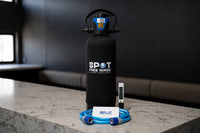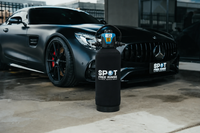


A deionised (DI) water system removes the dissolved minerals from your tap water so your final rinse dries spot free: no towelling, no white marks. For most home and small-business users, a portable inline DI tank (no plumbing, connects to your hose) is the right choice. The main things to get right are tank size (matched to how much you clean), resin quality, and having a TDS meter to know when to replace the resin.
What a deionised water system does
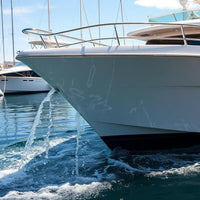
Tap water carries dissolved minerals, calcium, magnesium, salts, measured as TDS (total dissolved solids) in ppm. When that water dries, the minerals stay behind as spots. A DI system runs the water through ion-exchange resin that removes those minerals, producing water at 0 ppm. Rinse with it and the surface air-dries perfectly clean.
Types of deionised water system
| Type | How it works | Best for | Trade-offs |
|---|---|---|---|
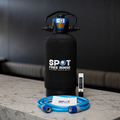
| Portable DI tank (inline) | Resin tank connects between hose and nozzle | Home detailing, small window/solar jobs | Resin needs replacing; simplest, no install |
| Reverse osmosis (RO) + DI | Membrane pre-filters, DI polishes to 0 ppm | High-volume / commercial | Slower, wastes some water, needs install |
| Water softener | Swaps hardness ions for sodium | Scale reduction only | Does NOT remove TDS, still spots |
For the vast majority of buyers, the portable inline DI tank is the sweet spot: cheapest to start, no plumbing, fully portable, and it delivers water at 0 ppm.
How to choose the right tank size
Bigger tanks hold more resin, so they produce more pure water before needing a replacement. Match the size to your use:
| Tank size | Roughly suits | Typical use |
|---|---|---|
| 10L (Lite) | Comfortable for a typical car | Regular home detailing, most popular |
| 15L (Pro) | Multiple cars / light pro use | Enthusiasts, small detailing side-business |
| 25L (Commercial, special order) | High volume / windows / solar | Pros, larger jobs |
How long the resin lasts depends heavily on your local water hardness, the higher your tap TDS, the faster it depletes.
What else matters before you buy
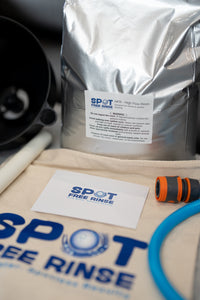
- Resin quality & replacement cost. You'll replace the resin periodically, so choose a system with affordable, available resin replacement kits. Mixed-bed resin gives the lowest TDS.
- A TDS meter. Essential, it tells you when output creeps above 10 ppm so you know exactly when to replace the resin.
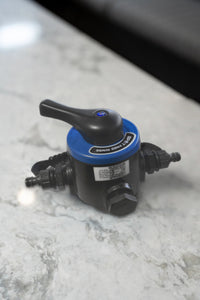
- Fittings & flow control. Standard hose fittings and a bypass tank head make the system far easier to live with.
- Portability. If you'll move it around the driveway, roof or job site, weight and handle design matter.
Car, windows or solar, does the same system work?
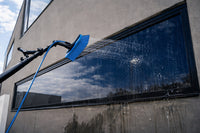
Yes. The same DI water that gives a spot free car rinse also gives streak-free windows and residue-free solar panels. If you clean windows or solar panels, pair the tank with a water-fed pole. The tank + pole bundle covers every surface from one setup.
Our recommendation
For most people: a 10L DI tank + a TDS meter + a resin replacement kit on hand. Scale up to 15L/25L if you clean multiple vehicles or do windows/solar. Browse the full range of deionised water systems.
Frequently asked questions
What is a deionised water system?
It's a filter, usually a tank of ion-exchange resin, that removes dissolved minerals from tap water, producing 0 ppm water that dries without leaving spots on cars, windows or solar panels.
What size DI tank do I need?
A 10L tank suits a typical car comfortably. Go larger (15 to 25L) for multiple vehicles, windows or solar work. Local water hardness affects how long each charge lasts.
Is a deionised water system better than a water softener?
For spot free results, yes. A softener only swaps hardness minerals for sodium and leaves the total dissolved solids in the water, so it still spots. A DI system removes the minerals entirely.
How do I know when to replace the resin?
Check the output with a TDS meter. When the reading rises above about 10 ppm, the resin is spent and it's time to replace it.