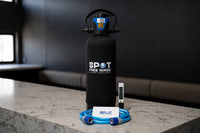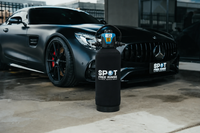


You've got a pressure washer and you're sick of chasing water spots with a towel. A DI water filter, also called a deioniser or a DI tank, fixes the rinse. It goes between your tap and your pressure washer and takes the minerals out of the water, so your pressure washer rinses the car with 0 ppm water that dries without spots. Here's how to set one up, which way round it goes, and how to get the most from the resin.
The short answer: connect your tap to the IN side of the DI tank and the OUT side to your pressure washer's water inlet. Wash with tap water on Bypass, switch to Filter for the final rinse, and let the car dry on its own. The tank sits before the pump, so it never sees the high pressure side.
Why a pressure washer rinse still leaves spots
A pressure washer doesn't clean the water, it just pushes it harder. Whatever minerals are in your tap water come out of the lance with it. Australian tap water runs from about 30 ppm to well over 400 ppm depending on where you live, and our tap water TDS guide has your city. The drop has to stop somewhere. When it stops it evaporates, and what's left dries as hard as rock.
DI (deionised) water has those minerals taken out, so there's nothing left in the drop to dry into a spot. You can rinse in the sun and pack up without a towel.
How to connect a DI tank to a pressure washer
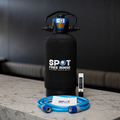
- Tap to tank. Run a hose from your garden tap to the IN side of the tank. Every Spot Free Rinse tank comes with a 2 m connector hose, and you use your own garden hose for the other run.
- Tank to pressure washer. Connect the OUT side of the tank to the water inlet on your pressure washer, the same place your garden hose normally goes.
- Turn the tap on and check for leaks. The tank runs on normal mains pressure. No power, no pump.
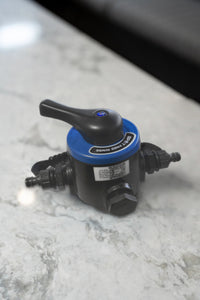
- Wash on Bypass. With the head on Bypass, tap water goes straight through to the pressure washer for the pre-rinse, foam and wash.
- Rinse on Filter. Flick the head to Filter and let the water run for a few seconds to clear the tap water still sitting in the hoses, then give the car its final rinse.
- Let it dry. No chamois, no towel. Wash. Rinse. Pack up.
The tank only ever sees mains pressure, because it sits before the pressure washer's pump. The high pressure stays between the pump and the lance.

What flow rate suits a DI tank on a pressure washer?
The tank doesn't restrict your flow, so your pressure washer runs at full pressure. What matters is whether the resin can keep up with the flow you run and still give you 0 ppm. Most home car pressure washers run around 5 to 8 L/min, which sits inside our Lite's guide of up to 10 L/min. If your machine runs more than 10 L/min, or your water is very hard, the Pro or Commercial hold more resin and keep up at higher flows.
Not sure what yours runs? It's on the label or in the manual. Some brands list it in litres per hour, so divide by 60. Our pressure washer flow rate guide explains the numbers, and our DI water flow rate guide explains how the resin keeps up.
Never choke the supply
A pressure washer needs its full water supply. Never slow it down by restricting its water supply, because starving the pump can damage it. Run it as normal, and when the TDS meter starts creeping up at your usual flow, replace the resin.
Keep resin out of your pressure washer
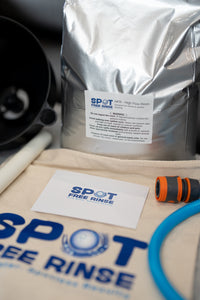
Loose resin beads getting past a tank can clog a pressure washer's inlet filter or a nozzle. Our tanks have mesh traps fitted in the fittings from the factory, so the resin stays in the tank and your equipment stays protected.
Cold water only
Always feed the tank from a cold tap. Water above about 40°C damages DI resin and shortens its life.
How to make the resin last
- Only rinse through the tank. Pre-rinse, foam and wash on Bypass, then switch to Filter for the final rinse.
- Don't over-rinse. A steady rinse that sheets the water off each panel is all it takes.
- Check the water with the TDS meter that comes with every tank. Fresh resin reads 0 ppm, and once it reads about 10 ppm at your usual flow it's time for a resin replacement.
- On very hard water, size up. A bigger tank holds more resin, keeps up at higher flows and works out cheaper per rinse.
Which tank suits your pressure washer?
The Lite 10L suits most people washing a car or two at home with a typical car pressure washer. The Pro 15L is worth it above about 300 ppm, for bigger vehicles, or if you'll do the windows too. The Commercial 25L holds the most resin, for detailers, fleets and high volume use. Put your postcode into the calculator on the tank page to see rinses for your water, or read our DI tank size guide.
Washing cars or cleaning windows?
Washing cars, 4WDs, caravans or boats. Our car washing equipment is built around the DI tank, with the bypass head fitted, a TDS meter and a hose in the box. It goes between your tap and your hose or pressure washer, and the Lite, Pro and Commercial tanks all run at full pressure. Wash. Rinse. Pack up.
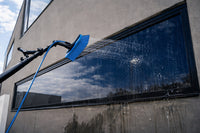
Cleaning windows or solar panels. Our window cleaning equipment pairs the same tank with a water fed pole. The tank and pole bundle has everything you need to start, and our window cleaning page shows how it works on glass and panels.
Pressure washer DI questions we get asked
Can I use a DI water filter with a pressure washer?
Yes. Connect it between the tap and the pressure washer's water inlet. It runs at full pressure, and the tank never sees the high pressure side.
Which way round does a DI tank go on a pressure washer?
Tap to the IN side of the tank, and the OUT side to the pressure washer's water inlet.
Does a DI tank reduce pressure washer pressure?
Ours doesn't. Water goes through at whatever rate you run it, so the pressure washer runs at full pressure.
What flow rate pressure washer works with a DI tank?
Most home car pressure washers run around 5 to 8 L/min, inside our Lite's 10 L/min guide. Above 10 L/min, or on very hard water, look at the Pro or Commercial.
Do I need to run the whole wash through the tank?
No, but you can. Most people wash with tap water on Bypass and switch to Filter for the final rinse, which makes the resin go much further. Running the whole wash through it works too, it just uses the resin a lot quicker.
Do I still need to dry the car?
No. Pure water leaves nothing behind when it dries, so you can pack up and let it air dry.
Still not sure which setup suits you? Call or text us on 0423 364 936 and we'll work it out together.