





You've got a spare bag of resin in the shed, or a tank that's been sitting since last summer, and you're wondering if it's still any good. DI resin doesn't go off quickly when it's stored properly. What uses it up is the minerals it pulls out of your water.
The short answer: unused resin keeps for about three years in its sealed bag if it's stored cool and kept from drying out or freezing, though it very slowly loses a little capacity as it ages. Resin in a tank doesn't expire either. It's used up by the water you run through it, and your TDS meter tells you when it's done.
How long does unused DI resin last?
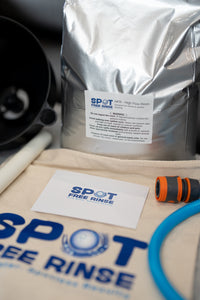
Resin makers' storage guides put ready to use mixed bed resin at about three years in its original, unopened packaging, as long as it's stored the right way. Our resin comes in vacuum sealed 5 L bags, so a spare bag on the shelf keeps well.
Even sealed, resin very slowly loses a little of its capacity as it ages. It doesn't suddenly stop working, but a fresh bag will go slightly further than one that's been sitting in the shed for years.
How to store spare DI resin
- Keep the bag sealed until you need it. Resin left open to the air dries out and shrinks, and dried out beads can crack when they get wet again.
- Keep it cool. Somewhere between about 0 and 40°C, out of direct sun. Heat above 40°C can cost resin some of its capacity.
- Don't let it freeze. Freezing and thawing can damage the beads. That's not a worry in most of Australia, but it's worth knowing in Canberra or the high country in winter.
Leaving a DI tank unused between washes
Resin is happy sitting in water in the tank between washes. If the tank will sit for a few weeks or more:
- Turn the tap off and leave the tank full of water, so the resin stays wet.
- Keep it out of direct sun and somewhere it won't freeze.
- Before your first rinse back, run the water through for a few seconds and check the reading with your TDS meter. Fresh resin reads 0 ppm.
Does resin in a tank go bad?
Not the way food does. DI resin swaps the minerals in your water for hydrogen and hydroxide, which join up to make pure water. Every bead has a limited number of places to hold those minerals, and once they're full, that resin is spent. So resin is used up by the water you put through it, not by the calendar.
That's also why the resin is used from the top down. The used layer grows from the top of the tank while the fresh resin below keeps working, so you'll see 0 ppm until close to the end. You can drag the resin through its life on our How it works page.
How to tell when DI resin is spent
- Your TDS meter reads above 0 at your usual flow. Once it reads about 10 ppm, it's time for a resin replacement.
- Light water spots start showing after the rinse.
- Turning the flow down brings the reading back to 0. That means the resin is near the end and can't keep up at your usual flow. Our DI water flow rate guide explains why.
What does damage DI resin
- Hot water. Never run water above about 40°C through the tank. Always connect it to a cold tap.
- Drying out. Don't leave resin open to the air.
- Freezing. Keep tanks and spare bags where they won't freeze.
Can you bring spent resin back?
Not at home. Mixed bed resin needs acid and caustic in a proper plant to recharge it, so it's replaced instead. On our tanks the swap takes about 15 minutes: tap pressure flushes the old resin out into a cloth bag and the fresh resin pours in through the funnel. Our guide on how to replace DI resin walks you through it, our resin life guide covers how far a set goes on different water, and resin replacement kits come pre-measured for your tank.
Washing cars or cleaning windows?
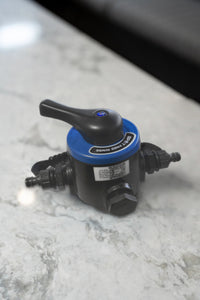
Washing cars, 4WDs, caravans or boats. Our car washing equipment is built around the DI tank, with the bypass head fitted, a TDS meter and a hose in the box. It goes between your tap and your hose or pressure washer, and the Lite, Pro and Commercial tanks all run at full pressure. Wash. Rinse. Pack up.
Cleaning windows or solar panels. Our window cleaning equipment pairs the same tank with a water fed pole. The tank and pole bundle has everything you need to start, and our window cleaning page shows how it works on glass and panels.
DI resin questions we get asked
Does DI resin expire?
Not quickly. Unused resin keeps for about three years in its sealed bag if it's stored cool and kept from drying out or freezing, and it very slowly loses a little capacity as it ages. Resin in a tank is used up by the minerals it removes, not by time.
How long does unused DI resin last?
Resin makers' storage guides put ready to use mixed bed resin at about three years in its original, unopened packaging, stored cool and kept from drying out or freezing. Its capacity drops very slowly over that time, so fresher resin goes slightly further.
How should I store DI resin?
Keep the bag sealed, somewhere between about 0 and 40°C, out of direct sun and where it won't freeze.
Can I leave my DI tank unused for a few months?
Yes. Turn the tap off, leave it full of water, and keep it out of the sun and where it won't freeze. Run the water for a few seconds and check the TDS meter before your first rinse back.
How do I know when DI resin is spent?
Check the water coming out of the tank with your TDS meter. Fresh resin reads 0 ppm. Once it reads about 10 ppm at your usual flow, or light spots start to show, it's time for a resin replacement.
Does DI water go bad?
Our tanks make it as you rinse, straight from your tap, so there's nothing to store.
Still not sure which setup suits you? Call or text us on 0423 364 936 and we'll work it out together.